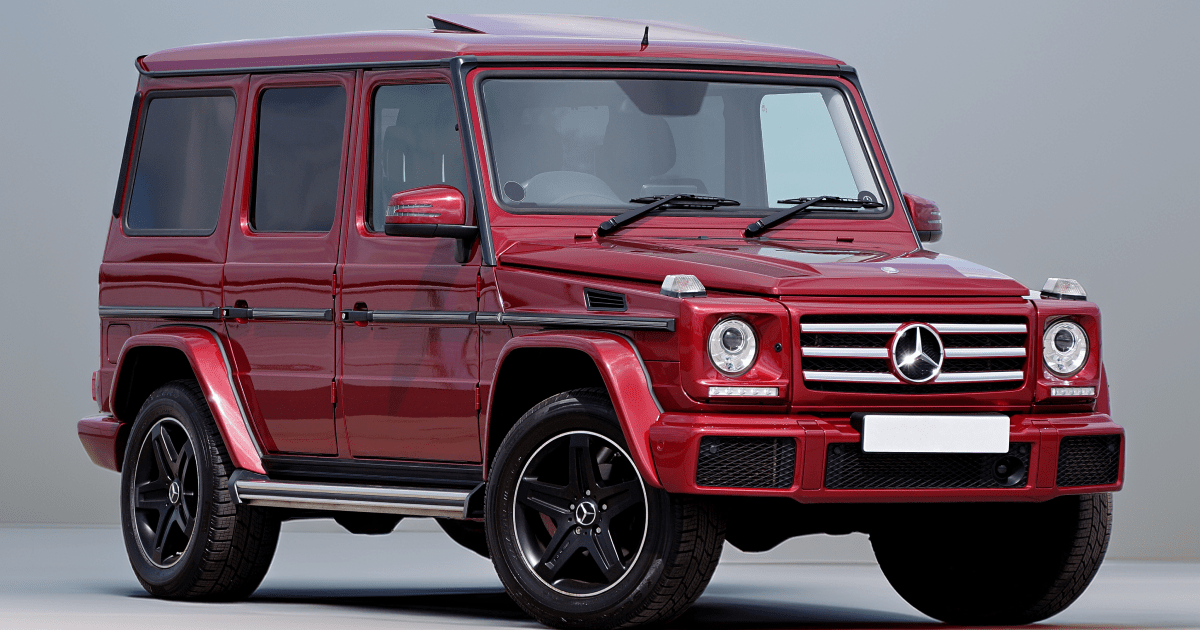
The Mercedes G-Wagon from Japan has become an increasingly popular option for buyers around the world. Known officially as the Mercedes-Benz G-Class, this iconic SUV combines rugged off-road capability with luxury design.
Today, many international buyers source a Mercedes G-Wagon from Japan through Japanese auto auctions and export services.
Demand for the G-Wagon is strong in markets such as the United States, Canada, Australia, Europe, and the Middle East. Interestingly, many of these vehicles are purchased through Japanese auto auctions and exported overseas.
But there is another detail many people notice first: when visiting Tokyo, it can feel like there are G-Wagons everywhere.
Why Visitors to Tokyo Notice So Many G-Wagons

Many travelers visiting Tokyo for the first time comment on the same thing: they have never seen so many Mercedes G-Wagons on the road in their life.
In neighborhoods such as Roppongi, Azabu, Hiroo, and Minato, it’s common to see multiple G-Class SUVs parked outside restaurants, luxury apartments, and hotels. For visitors coming from North America or Europe, the concentration can be surprising.
Japan is actually one of the strongest markets for the G-Class globally, and the model has consistently sold extremely well in the country relative to its size and price.
Several factors contribute to this phenomenon.
Luxury Cars as Assets in Japan
One reason the G-Class is popular in Tokyo is its reputation as a stable luxury asset.
Unlike many vehicles that depreciate rapidly, the G-Class tends to retain its value unusually well. Because the design changes very slowly over time and global demand remains strong, used models often maintain strong resale values.
Across multiple resale studies in the United States, Europe, and Japan, the Mercedes-Benz G-Class consistently ranks among the slowest-depreciating luxury SUVs.
Research from sources such as iSeeCars, Kelley Blue Book, and other automotive resale analyses shows that the G-Class typically depreciates roughly 40–50% after five years, significantly less than many luxury SUVs, which often lose 60–70% of their value during the same period.
In some years, the G-Class has even appeared on lists of vehicles with the lowest depreciation of any car on the market, not just within the SUV category.
For business owners in Japan, vehicles can sometimes also be treated as depreciable business assets when used for work purposes. While the details vary depending on the situation, this can make purchasing high-value vehicles financially attractive under certain circumstances.
At the same time, cars in Tokyo often function more as luxury items or personal statements rather than essential transportation. Public transit is extremely efficient, and many residents rely on trains for daily commuting.
As a result, buyers who do own cars sometimes prioritize vehicles that are distinctive and recognizable, and few SUVs are more recognizable than the G-Wagon.
A Brief History of the Mercedes-Benz G-Class

The G-Class began development in the early 1970s as a rugged off-road vehicle designed to operate in harsh environments.
Mercedes-Benz partnered with Austrian manufacturer Steyr-Daimler-Puch to create a durable four-wheel-drive platform capable of handling extreme terrain.
The name “Geländewagen” translates from German as “cross-country vehicle.”
Production began in 1979 in Graz, Austria, where the G-Class is still manufactured today.
Early versions of the vehicle were used primarily by:
- military organizations
- government agencies
- agricultural and industrial operators
Over time, Mercedes gradually introduced more refined civilian versions of the vehicle.
From Military Vehicle to Global Luxury Icon
Although the exterior design of the Mercedes G-Wagon has remained largely unchanged for decades, the interior and technology have evolved significantly.
During the 1990s and 2000s, Mercedes transformed the vehicle into a luxury SUV while preserving its iconic boxy appearance.
Modern models feature:
- powerful turbocharged engines
- premium leather interiors
- advanced infotainment systems
- cutting-edge safety technology
Despite these upgrades, the vehicle’s classic shape remains one of its most defining characteristics.
This unusual combination of heritage design and modern luxury has helped the G-Class develop a loyal global following.
Why the G-Class Holds Its Value Worldwide
One of the reasons the G-Wagon remains so popular internationally is its strong resale value.
Compared to many luxury SUVs, the G-Class tends to depreciate more slowly due to several factors:
- relatively limited production numbers
- strong brand reputation
- consistent global demand
- timeless styling that changes very little between generations
Because of this, many buyers view the G-Class not only as a luxury vehicle but also as a long-term automotive asset.
This strong global demand is also one reason international buyers frequently search for used G-Class vehicles in global markets like Japan.
Why The Mercedes G-Wagon From Japan is Often Exported Worldwide

Japan has become one of the most important sources of used luxury vehicles for export, including the Mercedes-Benz G-Class.
Several factors explain why buyers around the world frequently purchase G-Wagons from Japan.
High Vehicle Maintenance Standards
Japanese vehicle owners are widely known for maintaining their cars carefully.
Japan’s strict vehicle inspection system, known as Shaken, encourages proper maintenance and repairs.
As a result, a Mercedes G-Wagon from Japan tends to have:
- detailed maintenance records
- lower mileage
- excellent mechanical condition
For international buyers, this often makes Japanese vehicles particularly attractive.
Large Supply Through Japanese Auto Auctions
Japan operates one of the largest auto auction networks in the world, with hundreds of thousands of vehicles listed every week.
Luxury SUVs like the G-Class frequently appear in these auctions, including models such as:
- G350d
- G500
- G550
- AMG G63
This large inventory allows buyers to compare multiple vehicles and find the right specification before bidding.
Competitive Pricing
Luxury vehicles in Japan often depreciate faster than in some overseas markets.
Combined with a high turnover rate in the domestic market, this creates opportunities for international buyers to purchase vehicles at competitive prices compared to their home countries.
Even after shipping and import costs, many buyers find importing from Japan to be a cost-effective option.
Transparent Auction Inspection Reports
Japanese auto auctions are known for their detailed inspection reports and grading systems.
These reports typically include:
- exterior condition grades
- interior condition grades
- mechanical notes
- diagrams showing scratches or previous repairs
This transparency allows buyers to evaluate a vehicle’s condition before bidding.
Exporting a Mercedes G-Wagon From Japan
Export companies like JPC Trade help international buyers access Japanese auto auctions and manage the export process.
Typical services include:
- bidding on auction vehicles on behalf of buyers
- reviewing inspection reports
- arranging additional vehicle inspections
- inland transport within Japan
- export documentation and international shipping
This allows buyers around the world to purchase vehicles from Japan without needing to be physically present at the auctions.
The Mercedes-Benz G-Class has followed one of the most unusual paths in automotive history.
Originally designed as a rugged off-road vehicle, it has become one of the world’s most recognizable luxury SUVs. At the same time, Japan has developed into one of the most reliable markets for sourcing high-quality used vehicles.
Together, these factors explain why so many G-Wagons are exported from Japan every year.
For international buyers looking for condition, transparency, and competitive pricing, Japanese auto auctions remain one of the best places in the world to find a Mercedes-Benz G-Class.